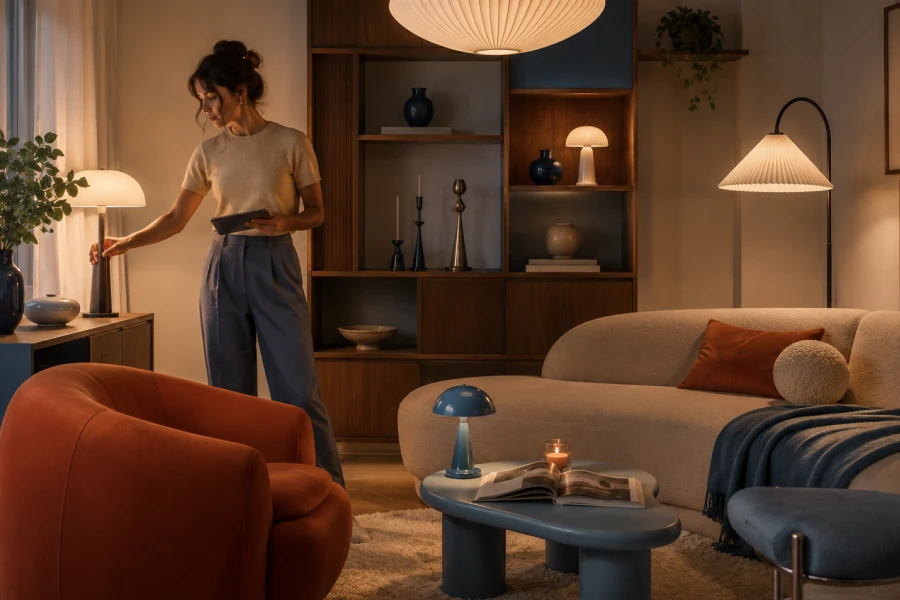
A home lighting planner changes how a room feels before furniture moves. It helps you see light as structure, not decoration. Many homes look unfinished because lighting gets chosen last. That mistake makes even beautiful rooms feel flat. A thoughtful plan adds warmth, rhythm, and purpose. It also supports work, rest, meals, and evening routines. Good lighting should feel easy, not overly technical. Small choices create comfort when they work together. The right system helps every corner earn its place. That is why planning matters from the beginning.
Lighting works best when it begins with feeling. A living room may need calm evenings and bright mornings. A bedroom may need softness, privacy, and low glare. The modern lighting strategy starts by naming those daily moments. Then each fixture receives a clear role. Overhead lights support movement and general visibility. Table lamps create softer pools of comfort. Wall sconces add depth without crowding surfaces. Dimmers help one room shift through the day. Mood becomes practical when every layer has purpose.
Most rooms need more than one light source. One ceiling fixture usually creates harsh shadows. Layering makes the whole space feel richer. Ambient lighting gives the room its base. Task lighting supports reading, cooking, grooming, or focused work. Accent lighting highlights texture, art, shelving, or architecture. A cozy interior lighting setup balances these layers without clutter. The goal is not brightness everywhere. It is brightness where life actually happens. Depth appears when light has direction and contrast.
Cold rooms often suffer from mismatched bulbs. Some lights feel blue, while others feel yellow. That contrast can make a room look chaotic. Fixtures may also sit at the wrong height. Lamps that are too small disappear visually. Oversized fixtures can overwhelm a quiet space. Bare bulbs often create uncomfortable glare. Corners may stay dark and visually heavy. A good lighting plan corrects these problems early. Comfort improves when every choice supports one atmosphere.
Smart lighting should simplify daily life. It should not make a room feel complicated. Timers can support mornings, evenings, and routines. Scenes help one room shift between different needs. Warm dimming makes nighttime spaces feel calmer. Motion lighting works well in hallways and closets. A smart home lighting plan also reduces decision fatigue. You press one button and the mood changes. Technology feels luxurious when it quietly disappears. The best systems serve the room, not the gadget.
Fixtures should feel connected to the room’s language. A sculptural pendant can make a dining zone special. A simple shade can soften a casual bedroom. Metal finishes should repeat somewhere nearby. Glass fixtures add lightness and reflection. Fabric shades bring warmth and texture. Black fixtures can add contrast in bright spaces. Brass can soften neutral palettes beautifully. The fixture should support the story, not steal it. Style works best when it feels repeated and intentional.
The real test comes after sunset. That is when weak lighting becomes obvious. A successful plan makes evening rooms inviting. It creates soft paths from one zone to another. Reading corners feel ready instead of forgotten. Kitchens become practical without feeling clinical. Bedrooms become calmer before sleep. Mirrors, art, and shelves gain quiet presence. The aesthetic lighting layout makes ordinary routines feel polished. Home feels better when light works with life.


Leave a comment