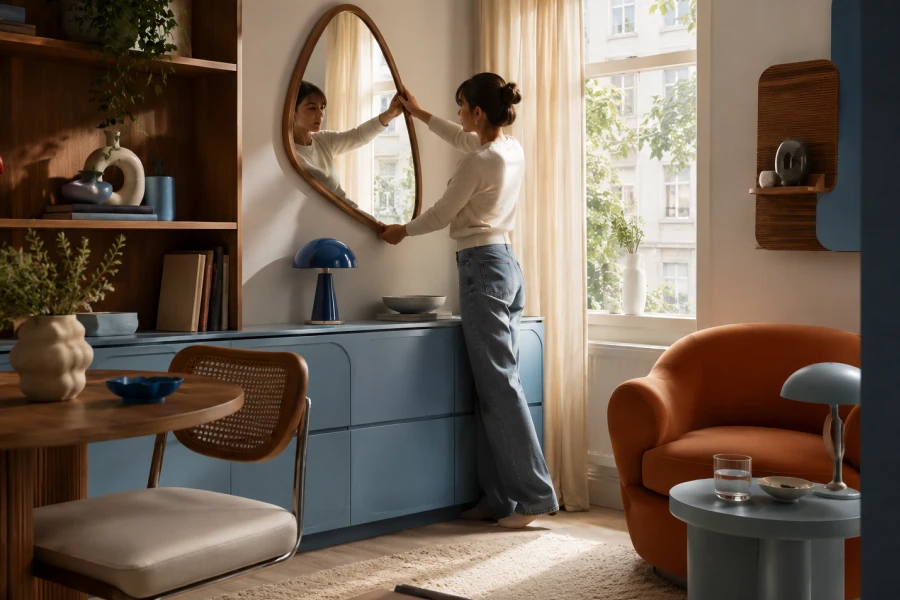
Mirror placement for small rooms can change a cramped space quickly. It helps light travel farther through the room. It also gives the eye a longer visual path. Small rooms often feel tight because surfaces stop attention. A mirror can interrupt that limit beautifully. The effect depends on position, scale, and reflection. Random placement may create clutter instead of openness. Strategic placement makes the room feel calmer. It can also make decor feel more elevated. The best mirror feels like architecture, not an afterthought.
A mirror doubles whatever it faces. That simple rule matters most. Reflecting a window can brighten a room. Reflecting clutter can make the space feel busier. A mirror styling method helps choose the right view. Aim for light, artwork, greenery, or open floor space. Avoid reflecting crowded shelves or messy corners. The reflection should add calm visual depth. It should not multiply visual noise. Good placement begins by asking what the mirror will show.
Windows are powerful partners for mirrors. A mirror across from a window can spread daylight. An angled mirror can bounce light into darker corners. A side placement may feel softer than direct reflection. The small room decor plan should test these options visually. Harsh glare may require a different angle. Curtains can soften strong reflected light. Plants near windows often look beautiful in reflection. The goal is brightness without discomfort. Window-based placement can make a room feel instantly larger.
Scale changes the entire effect. A tiny mirror may look decorative but weak. A large mirror can behave like another window. Tall mirrors lengthen the wall visually. Wide mirrors can stretch a narrow room. Frames also influence the perceived size. Slim frames feel clean and airy. Chunky frames add weight and character. The mirror should relate to nearby furniture. Proper scale makes expansion feel believable.
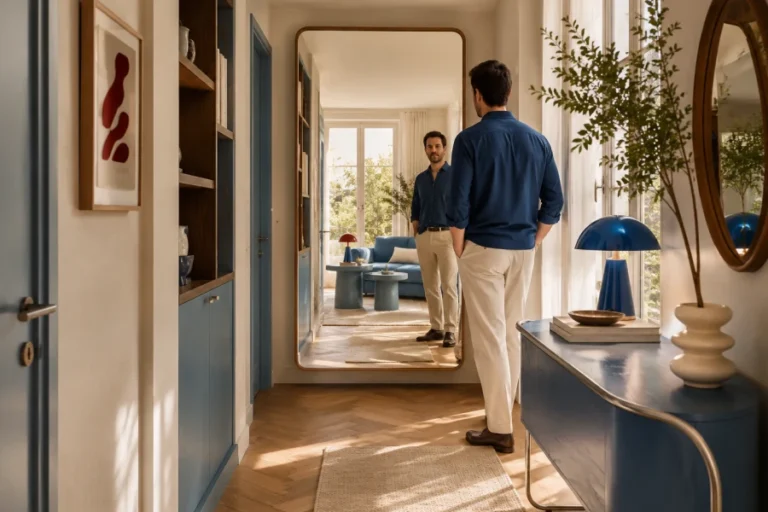
Furniture gives mirrors useful anchors. A mirror above a console can define an entry. One above a sofa can widen a living area. A bedroom mirror above a dresser adds function and light. A home mirror layout keeps height and proportion balanced. Leave enough space between furniture and frame. The mirror should not float awkwardly. Its width should connect to the furniture below. This creates a designed relationship. Anchored mirrors feel calmer than randomly placed ones.
Mirrors can make problems louder. A mirror facing a busy doorway may feel restless. One facing a bed can disturb sleep for some people. A mirror opposite harsh lighting can create glare. Too many mirrors can feel cold and confusing. Poorly placed mirrors may reflect cords or storage. These issues are easy to avoid. Walk the room before hanging anything. Notice what each angle captures. A strong placement should simplify the room visually.
Successful mirror placement feels subtle. Guests notice the room first, not the trick. Light appears softer and more generous. Corners feel less closed in. Furniture seems to breathe a little more. A space-expanding mirror strategy can make modest rooms feel polished. It does not require renovation or new furniture. It simply redirects attention and light. That makes mirrors one of the smartest small-space tools. Placement turns reflection into real design power.


Leave a comment